
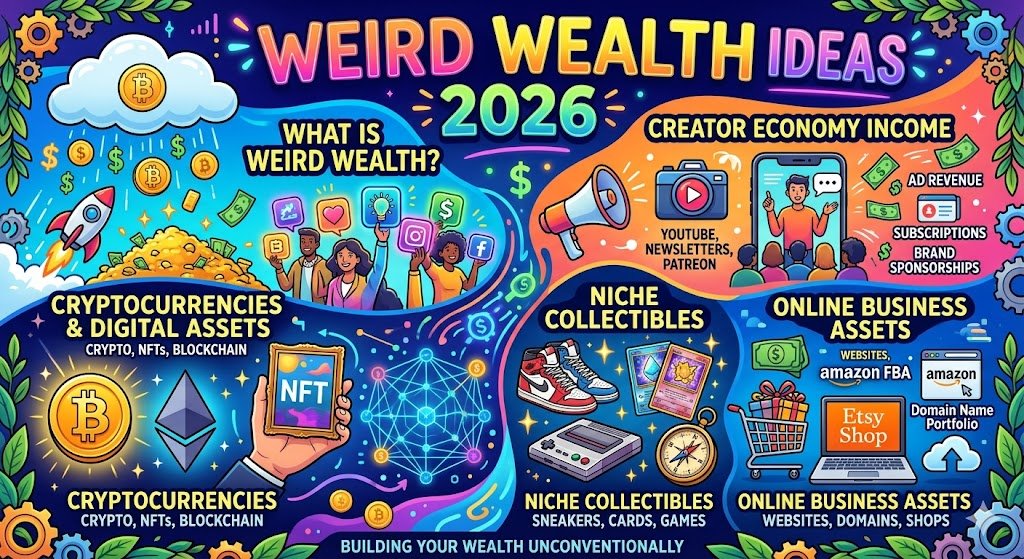
In a world where stock portfolios, real estate holdings, and retirement accounts have long defined financial success, a new phenomenon is capturing public attention. Across social media feeds, business publications, and investment circles, stories of people building fortunes from unexpected sources are becoming increasingly common. From rare collectibles and digital assets to niche intellectual property and unconventional side businesses, the concept of weird wealth is reshaping how people think about money.
What makes the trend so fascinating is not just the money itself. It is the realization that valuable assets can emerge from places most people overlook. A vintage toy collection sitting in an attic, a niche online community, or ownership rights to a viral piece of content can suddenly become worth far more than traditional investments. As economic uncertainty pushes individuals to diversify income streams, weird wealth has evolved from a curiosity into a serious financial conversation.
Understanding the Rise of Weird Wealth
The term weird wealth refers to wealth accumulated through unconventional, often unexpected assets or income sources. Unlike traditional wealth built through salaries, stocks, or property, weird wealth emerges from unique opportunities that challenge conventional financial wisdom.
This shift reflects broader changes in the global economy. Technology has lowered barriers to entry, allowing individuals to monetize hobbies, expertise, and niche interests. Digital marketplaces connect buyers and sellers worldwide, creating liquidity for assets that previously had limited value. As a result, people are discovering new pathways to financial success that were nearly impossible a generation ago.
Economic researchers have observed growing diversification in personal wealth creation strategies. While conventional investments remain dominant, alternative assets have gained attention due to changing consumer preferences and technological innovation. The modern financial landscape increasingly rewards creativity alongside capital.
How Unusual Assets Became Serious Investments
Historically, wealth was closely tied to land ownership, business operations, and financial securities. Alternative assets existed but often remained outside mainstream investing. Collectibles, rare memorabilia, and niche intellectual property were generally viewed as hobbies rather than wealth-building vehicles.
The internet transformed this dynamic. Online auction platforms, digital marketplaces, and social media communities created global demand for specialized items. Suddenly, collectors could reach millions of potential buyers. Price discovery became more transparent, and previously obscure markets gained legitimacy.
Today, investors monitor sectors ranging from rare trading cards to digital collectibles. While these assets carry unique risks, some have delivered extraordinary returns. Their growing popularity has contributed significantly to public fascination with weird wealth stories.
The Digital Economy’s Role in Creating Weird Wealth
One of the most powerful drivers behind weird wealth is the expansion of the digital economy. Individuals can now create valuable digital products with minimal upfront investment. A single software tool, online course, newsletter, or mobile application can generate recurring revenue for years.
Content creators have become particularly prominent examples. Influencers, educators, podcasters, and independent publishers often monetize audiences through subscriptions, sponsorships, licensing agreements, and merchandise sales. In many cases, the audience itself becomes a highly valuable business asset.
Artificial intelligence, automation, and creator-focused platforms continue to expand opportunities. As technology evolves, new forms of digital ownership and monetization are likely to emerge, creating even more unconventional pathways to financial success.
Collectibles and the New Wealth Landscape
Collectibles represent one of the most visible examples of weird wealth. Markets for sports memorabilia, luxury watches, vintage toys, rare comic books, and collectible cards have attracted significant attention in recent years.
What drives these markets is scarcity combined with emotional value. Collectors are often willing to pay substantial premiums for items linked to nostalgia, cultural significance, or historical importance. Limited supply further enhances perceived value.
However, collectible investments require expertise. Market trends can change quickly, and valuations may fluctuate dramatically. Successful collectors often spend years developing specialized knowledge before achieving meaningful financial gains. Their stories highlight both the opportunities and risks associated with unconventional assets.
Intellectual Property as a Hidden Source of Wealth
Intellectual property has become one of the most powerful yet overlooked forms of weird wealth. Patents, trademarks, copyrights, and licensing agreements can generate income long after the original work is created.
Musicians, writers, software developers, and entrepreneurs increasingly recognize the long-term value of ownership rights. A popular song, innovative product design, or successful software application can produce recurring revenue through licensing and royalties.
As knowledge-based industries expand, intellectual property continues to gain importance. Many financial experts now view ownership of unique ideas and creative works as a critical component of modern wealth creation strategies.
Social Media and the Visibility of Unconventional Fortunes
Social media has dramatically amplified public awareness of weird wealth. Platforms showcase individuals earning substantial income through activities that once seemed unusual or impossible.
Stories about reselling sneakers, collecting vintage electronics, running niche online communities, or building businesses around specialized interests regularly attract millions of views. These narratives resonate because they challenge traditional assumptions about financial success.
At the same time, social media can distort perceptions. Viral success stories often receive disproportionate attention, while failures remain largely invisible. This creates a need for critical thinking and realistic expectations when evaluating unconventional wealth opportunities.
The Psychology Behind Weird Wealth
The popularity of weird wealth reflects deeper psychological trends. People are naturally drawn to stories that defy expectations. The idea that ordinary objects or unconventional skills can generate significant wealth feels both surprising and inspiring.
Behavioral economists note that humans often overvalue unique opportunities because they appear more exciting than traditional investments. This emotional appeal contributes to strong interest in alternative assets and unusual business ventures.
Nevertheless, successful wealth creation still requires discipline, research, and long-term planning. The most sustainable examples of weird wealth typically combine creativity with careful financial management rather than relying solely on luck.
Market Trends Driving Alternative Assets
Several broader market trends continue to support growth in unconventional wealth-building strategies. Increased digital connectivity allows niche markets to scale globally. Remote work enables entrepreneurs to reach customers across geographic boundaries.
Meanwhile, younger generations often prioritize experiences, personalization, and community engagement. These preferences increase demand for specialized products, services, and collectibles that might have been overlooked in previous decades.
Financial institutions are also paying greater attention to alternative asset classes. While mainstream adoption remains limited, growing interest from investors and analysts suggests that unconventional assets will remain an important topic in wealth management discussions.
Risks and Challenges of Pursuing Weird Wealth

Despite its appeal, weird wealth is not without significant risks. Many unconventional assets lack the transparency and regulatory oversight associated with traditional investments. Valuations may be subjective, making it difficult to determine fair market prices.
Liquidity presents another challenge. Unlike publicly traded stocks, niche assets may take time to sell. Market demand can shift rapidly, leaving owners unable to realize expected returns.
Experts consistently emphasize diversification. Relying entirely on unconventional assets can expose individuals to substantial financial volatility. Successful investors often balance alternative opportunities with more established investment strategies.
Lessons from Real-World Success Stories
Many well-known weird wealth stories share common characteristics despite their unconventional nature. Successful individuals often identify emerging trends before they become mainstream. They develop deep expertise within specific niches and maintain patience during periods of uncertainty.
Another recurring theme is community engagement. Whether building audiences, serving collectors, or creating digital products, long-term success frequently depends on cultivating trust and relationships.
These examples demonstrate that unusual wealth creation rarely happens overnight. Behind seemingly surprising success stories lies substantial effort, strategic decision-making, and a willingness to adapt to changing market conditions.
The Future of Weird Wealth
Looking ahead, weird wealth is likely to evolve alongside technological and cultural changes. Artificial intelligence, virtual environments, creator economies, and decentralized digital systems may generate entirely new categories of valuable assets.
Future wealth creators may derive income from opportunities that seem unfamiliar today. Digital identities, virtual experiences, AI-generated intellectual property, and community-driven platforms could become significant economic assets.
As innovation accelerates, the definition of wealth itself may continue expanding. Rather than replacing traditional investments, unconventional assets will likely complement them, offering additional pathways for financial growth and diversification.
Key Takeaways
- Weird wealth refers to fortunes built through unconventional assets and income sources.
- Technology and digital marketplaces have expanded opportunities for alternative wealth creation.
- Collectibles, intellectual property, digital products, and niche communities are increasingly valuable assets.
- Social media has amplified awareness of unusual success stories.
- Alternative assets can offer significant returns but often involve higher risk and lower liquidity.
- Expertise, patience, and diversification remain essential for sustainable wealth building.
- Emerging technologies are expected to create new forms of unconventional wealth in the coming years.
- Successful weird wealth strategies typically combine creativity with sound financial principles.
FAQ
What is weird wealth?
Weird wealth describes wealth accumulated through unconventional assets, businesses, or opportunities that fall outside traditional categories such as stocks, real estate, and salaried employment.
Is weird wealth a legitimate investment strategy?
Certain forms of weird wealth can be legitimate investments. However, they often involve higher risks, less liquidity, and greater dependence on specialized knowledge than traditional financial assets.
What are examples of weird wealth?
Examples include rare collectibles, intellectual property royalties, digital products, niche online businesses, vintage memorabilia, and ownership of unique digital assets.
Why has weird wealth become so popular?
The growth of digital platforms, social media, and global online marketplaces has made unconventional assets more accessible, visible, and profitable than ever before.
Can anyone build weird wealth?
Many opportunities are accessible to ordinary individuals, but success generally requires expertise, patience, market research, and strategic decision-making rather than luck alone.
Are alternative assets safer than traditional investments?
Not necessarily. Alternative assets often carry additional risks, including valuation uncertainty, market volatility, and limited liquidity. Diversification remains important.
What role will technology play in future weird wealth trends?
Technology is expected to create entirely new asset categories, including AI-driven intellectual property, virtual experiences, digital communities, and other forms of online value creation.
Conclusion
The growing fascination with weird wealth reflects a larger transformation in how value is created, owned, and exchanged. While traditional investments remain foundational to financial planning, unconventional assets are opening doors that previous generations could scarcely imagine. From digital products and intellectual property to collectibles and niche communities, wealth is increasingly emerging from creativity, innovation, and specialized knowledge.
For readers, the lesson is clear: opportunity often exists where others are not looking. By staying informed, developing expertise, and maintaining a disciplined approach to risk, it is possible to identify emerging sources of value before they become mainstream. As the economy continues to evolve, now is the perfect time to explore the changing world of weird wealth and discover what future opportunities may be hiding in plain sight.
