
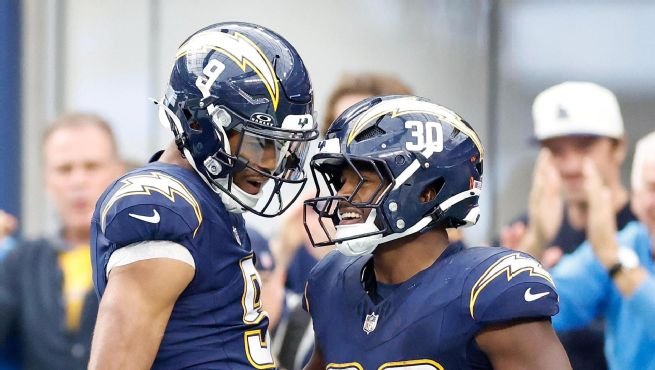
The los angeles chargers vs las vegas raiders match player stats provide valuable insight into one of the most competitive rivalries in the AFC West. Every meeting between these two franchises attracts significant attention from football fans, analysts, and fantasy football enthusiasts who want to understand which players made the biggest impact on the field.
Player statistics often tell the real story behind a game’s outcome. While the final score reveals the winner and loser, individual performances help explain how momentum shifted throughout the contest. From passing efficiency and rushing production to receiving contributions and defensive plays, every statistic contributes to the overall picture of the matchup.
Quick Bio
| Match Detail | Information |
|---|---|
| Competition | NFL Regular Season |
| Teams | Los Angeles Chargers vs Las Vegas Raiders |
| Division | AFC West |
| Venue | Allegiant Stadium |
| Winning Team | Los Angeles Chargers |
| Final Score | Chargers 20 – Raiders 9 |
| Key Quarterback (Chargers) | Justin Herbert |
| Key Quarterback (Raiders) | Geno Smith |
| Notable Receiver | Quentin Johnston |
| Leading Raiders Receiver | Jakobi Meyers |
Overview of the Match
The latest meeting between the Chargers and Raiders showcased disciplined football, efficient offensive execution, and strong defensive play. The Chargers managed to control important moments of the game and capitalized on opportunities when they appeared.
On the other hand, the Raiders struggled to maintain offensive consistency. Although they showed flashes of promise and moved the ball at times, crucial mistakes prevented them from converting drives into touchdowns. This contrast between efficiency and missed opportunities ultimately influenced the outcome.
Quarterback Performance Analysis
Justin Herbert’s Strong Showing
Justin Herbert once again demonstrated why he is considered one of the NFL’s premier quarterbacks. His ability to read defenses and deliver accurate passes helped the Chargers maintain offensive rhythm throughout the game.
Herbert completed 19 of 27 pass attempts for 242 yards and two touchdowns without throwing an interception. This clean and productive performance highlighted his decision-making skills and ability to avoid costly mistakes under pressure.
Geno Smith’s Challenging Day
Geno Smith faced a difficult defensive unit and encountered several obstacles during the contest. While he completed a respectable number of passes, turnovers significantly impacted his overall performance.
Smith finished with 24 completions on 43 attempts for 180 passing yards. Unfortunately, three interceptions limited the Raiders’ ability to build momentum and placed additional pressure on the team’s defense.
Passing Statistics Breakdown
Chargers Passing Attack
The Chargers’ passing offense displayed balance and effectiveness. Herbert distributed the football efficiently and found open targets at crucial moments throughout the game.
The passing game benefited from strong route running and reliable receiving performances. Big plays through the air allowed Los Angeles to stretch the field and create scoring opportunities that eventually made the difference.
Raiders Passing Attack
The Raiders generated some positive passing plays, but consistency remained an issue. Although several receivers contributed, the offense struggled to produce explosive plays when they were needed most.
The inability to protect possession proved costly. Turnovers not only halted promising drives but also gave the Chargers favorable field position.
Rushing Performance and Ground Game Impact
Chargers Rushing Effort
The Chargers did not rely heavily on their rushing attack, but they used it strategically to maintain balance. Effective rushing attempts helped keep the Raiders’ defense honest and opened passing lanes for Herbert.
Even modest gains on the ground contributed to time management and offensive stability. The Chargers focused on efficiency rather than volume, which proved successful.
Raiders Running Game
The Raiders showed determination in their rushing efforts. Ashton Jeanty emerged as one of the team’s more productive offensive players and provided valuable yardage on multiple carries.
Despite some positive runs, the Raiders were unable to establish sustained dominance on the ground. This limitation forced the offense into more passing situations, increasing pressure on the quarterback.
Receiving Leaders and Key Playmakers
Quentin Johnston’s Big Contribution
One of the standout performers for Los Angeles was Quentin Johnston. His ability to create separation and gain significant yardage after the catch played an important role in the Chargers’ success.
Johnston recorded three receptions for 71 yards and a touchdown. His explosive scoring play represented one of the game’s defining moments and energized the Chargers’ offense.
Jakobi Meyers Leads Raiders Receivers
Jakobi Meyers delivered a reliable performance despite the team’s offensive struggles. He consistently found openings in coverage and served as a dependable target.
Meyers finished with six catches for 68 yards. Although he did not score a touchdown, his efforts helped keep drives alive and provided a bright spot for the Raiders’ passing game.
Defensive Impact and Turnovers
Chargers Defense Creates Opportunities
The Chargers’ defense deserves significant credit for the victory. Their ability to force turnovers changed the momentum of the game and limited the Raiders’ scoring chances.
Defensive pressure, disciplined coverage, and situational awareness contributed to three interceptions. These takeaways provided valuable opportunities for the offense and disrupted the Raiders’ game plan.
Raiders Defensive Effort
Despite the loss, the Raiders’ defense worked hard throughout the contest. Holding an opponent to 20 points is generally a competitive performance in today’s NFL.
However, repeated exposure caused by offensive turnovers placed additional strain on the defensive unit. Over time, maintaining that level of resistance became increasingly difficult.
Positive and Negative Takeaways
Positive Aspects for the Chargers
The Chargers executed an efficient offensive strategy and avoided major mistakes. Their quarterback delivered a clean performance, the receiving corps produced big plays, and the defense generated critical turnovers.
Another positive sign was the team’s overall discipline. Limiting errors allowed Los Angeles to maximize scoring opportunities and maintain control of the game.
Negative Aspects for the Raiders
The Raiders struggled with ball security, which ultimately proved to be the biggest negative factor. Turnovers repeatedly halted drives and shifted momentum toward the Chargers.
Additionally, the offense found it difficult to generate explosive scoring plays. Without touchdowns, sustaining a comeback became increasingly challenging as the game progressed.
Why These Match Player Stats Matter
Player statistics help fans understand individual contributions beyond the final score. Quarterback efficiency, receiving production, rushing effectiveness, and defensive takeaways all influence game outcomes.
For analysts, coaches, fantasy football players, and dedicated fans, these numbers provide a deeper understanding of team strengths and weaknesses. They also offer clues about future performance and strategic adjustments.
Conclusion
The los angeles chargers vs las vegas raiders match player stats reveal a game defined by efficient quarterback play, timely defensive stops, and critical turnovers. Justin Herbert’s productive performance and Quentin Johnston’s explosive receiving contribution helped propel the Chargers to victory.
Meanwhile, the Raiders showed effort and determination but struggled to overcome offensive mistakes. While individual players such as Jakobi Meyers and Ashton Jeanty produced encouraging performances, turnovers limited the team’s chances of success. Ultimately, the statistics tell the story of a disciplined Chargers team that capitalized on opportunities and secured an important divisional win.
FAQ
Who was the best player in the Los Angeles Chargers vs Las Vegas Raiders game?
Justin Herbert was among the top performers, recording 242 passing yards, two touchdowns, and no interceptions.
Which receiver had the most impact in the game?
Quentin Johnston made a major impact with 71 receiving yards and a touchdown for the Chargers.
Who led the Raiders in receiving yards?
Jakobi Meyers led the Raiders with six receptions and 68 receiving yards.
How many interceptions were thrown by the Raiders?
The Raiders threw three interceptions during the matchup.
Why are match player stats important?
Match player stats help evaluate individual performances, identify strengths and weaknesses, and provide deeper insight into how a game was won or lost.
What was the final score of the game?
The Los Angeles Chargers defeated the Las Vegas Raiders by a score of 20-9.
